
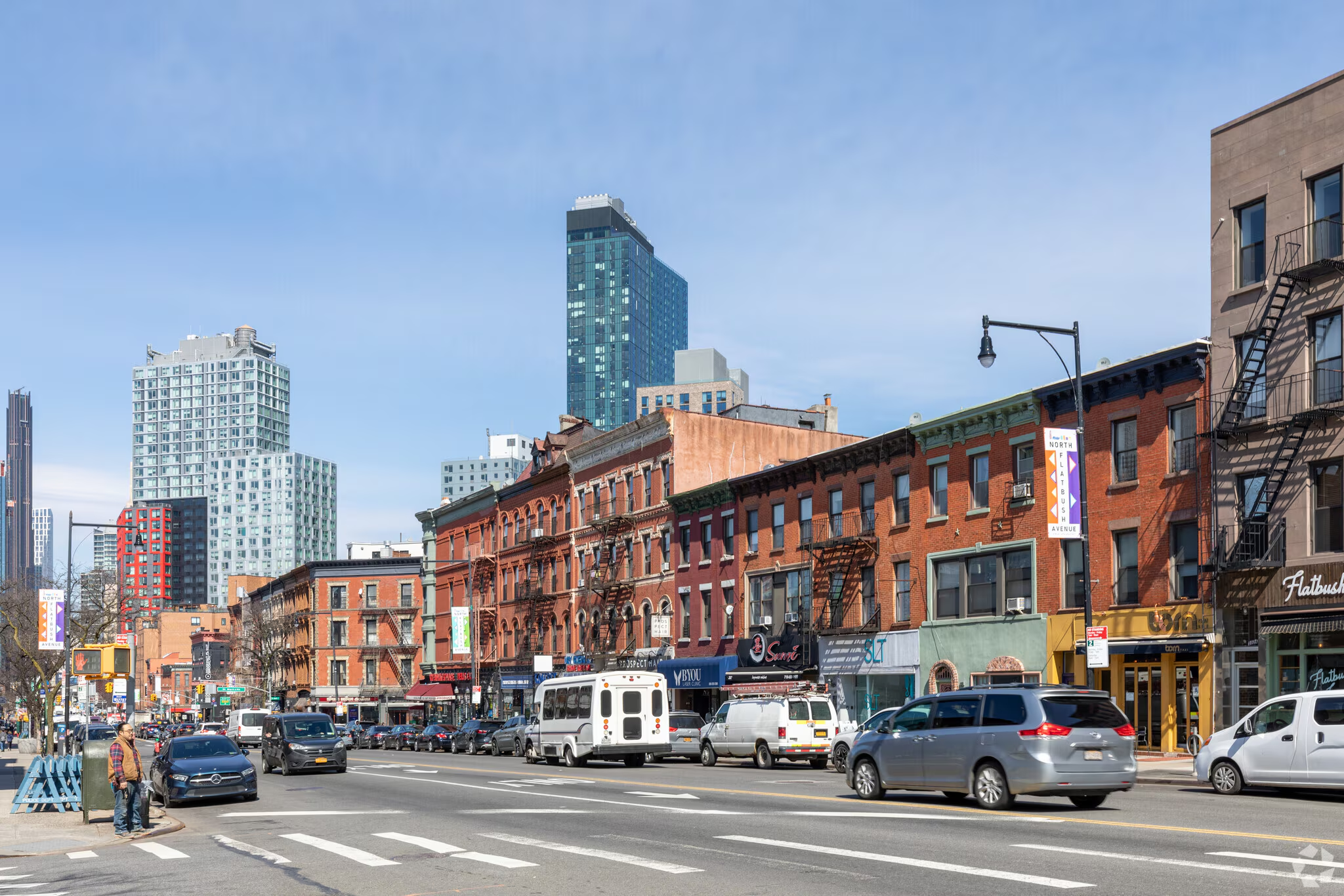
Brooklyn used to give New Yorkers a little breathing room, even when the city felt expensive from every angle. That space is shrinking fast, and rental prices now sit at the center of a hard question: how long can a borough stay itself when the people who built its daily life cannot renew a lease? A renter in Crown Heights, Sunset Park, or Bushwick may still love the block, the bodega, the train routine, and the neighbor who takes packages in. Love does not cover a $500 jump. This is the gap many Brooklyn renters are facing now. The listing price is one problem. The income test, broker fee history, moving cost, child care bill, student loan, and subway commute make the real number harsher. For anyone following local real estate reporting, Brooklyn’s rent story is no longer a niche concern. It is a household budget story, a neighborhood stability story, and a warning for working families across the USA. The question for readers is not whether Brooklyn remains popular. It does. The sharper question is whether popularity is being allowed to price out the people who gave the place its texture.
Why Rental Prices Feel Like a Pay Cut in Brooklyn
The first shock is not always the number on the listing. It is the moment you compare that number with the life you already have. A raise may land, then disappear into a renewal notice. A second job may help, then vanish into daycare or a student loan payment. Brooklyn renters are not reacting to one bad month. They are reacting to a market where each lease cycle feels like a quiet cut to take-home pay. That is why the anger feels personal. The borough is not only asking for more money. It is asking people to shrink the rest of their lives around rent.
The monthly math now breaks before the lease is signed
A $4,000 apartment sounds like a luxury problem until you see how many ordinary units have moved near that line. Recent market reports have placed Brooklyn median rents around that level, with some months pushing higher. That does not mean every block costs the same. It means the middle of the market has moved into a range that used to feel reserved for newer towers or prime waterfront streets.
The pain starts before keys are handed over. First month, security deposit, possible moving costs, application charges, furniture gaps, pet fees, and time away from work can turn a normal move into a cash drain. A teacher leaving Bed-Stuy for a smaller place in Kensington may not be “choosing lifestyle.” She may be choosing the only option that keeps the checking account above water.
Here is the part people miss: high rent also punishes staying put. If your current apartment is still cheaper than nearby listings, you may accept repairs that drag on, a cramped second bedroom, or a longer commute for your partner. The market trains you to be grateful for a place that no longer fits.
Why a higher paycheck can still lose to NYC housing costs
Many renters earn more than they did five years ago and still feel poorer. That is not bad budgeting. NYC housing costs have outrun the small wins many workers fought for. A $6,000 annual raise can look decent in January. Spread across twelve months, then subtract rent growth, taxes, groceries, transit, and insurance. The raise may be gone by spring.
Brooklyn also has a strange affordability trap. If your income is too high for some subsidized programs but too low for market comfort, you sit in the squeezed middle. You may not qualify for help, yet you cannot compete with households bringing in two tech salaries or a guarantor with deep pockets. That middle group includes nurses, restaurant managers, junior attorneys, nonprofit staff, city workers, and parents who need a two-bedroom near school.
The counterintuitive truth is that earning more can make the search feel worse. You expect choice. Instead, you discover that a stronger paycheck only gets you permission to apply for apartments that still stretch the budget. For many households, the issue is not whether Brooklyn is desirable. It is whether desire has become priced like a penalty. The cruelest part is emotional: people who did what they were told to do, worked more, saved more, and built credit, still find the door half closed.
The Supply Crunch Is Not Abstract on a Brooklyn Block
A tight rental market can sound like a chart problem. In Brooklyn, it feels like standing on a sidewalk with fifteen other people waiting for the same open house. It feels like sending pay stubs before you have seen the hallway. It feels like refreshing listings during lunch because a unit posted at 10 a.m. may be gone by dinner. Supply is not an academic word here. It is the difference between having choices and taking what appears. When options are scarce, renters stop shopping and start defending themselves. The official vacancy numbers matter because they explain the mood at the open house: tense, rushed, and full of people who know there may not be a second chance nearby.
Low vacancy turns ordinary apartment hunting into a contest
New York City’s official housing survey has shown vacancy near historic lows, and the lowest-cost units are often the hardest to find. The NYC Housing and Vacancy Survey is useful because it does not only count glossy listings. It looks at the housing stock across the city, including the parts that shape daily life for working households.
That matters in Brooklyn because scarcity changes behavior. Renters apply faster than they should. They skip questions about heat, noise, leaks, or building management because hesitation can cost the unit. A couple searching in Prospect Lefferts Gardens might see a decent one-bedroom on Tuesday and feel pressure to sign by Wednesday, before they have checked the evening commute.
The non-obvious harm is that low vacancy weakens quality control. When people have options, bad landlords lose tenants. When options vanish, even poor units get filled. A market can look “strong” on paper while the renter experience gets weaker room by room. It also rewards speed over care, which is a bad way to make one of the largest financial decisions of the year.
New buildings help, but not always where locals need relief
Brooklyn has added apartments, especially in places like Downtown Brooklyn and along rezoned corridors. New supply helps over time. More homes matter. Still, the gap between a new tower lease and a local family’s budget can be wide enough to feel insulting. A building can add hundreds of units and still do little for the renter trying to stay under $2,500.
This is where the debate gets messy. Some residents hear “build more” and picture towers replacing small shops. Some housing advocates hear resistance and see the math getting worse. Both fears can be true at the same time. Brooklyn needs more homes, yet the type, price, and location of those homes decide who gets relief.
A new studio near major transit may absorb demand from a Manhattan renter, which can slow pressure elsewhere. That is a real effect. It is also slow. If you need a lease by August, a theory about long-term filtering will not pay your deposit. The practical answer has to include both production and protection, not one slogan shouted over the other. Brooklyn cannot freeze itself in place, but it also cannot call every new unit a win if the people under stress never get a fair shot at it.
How Neighborhood Change Rewrites the Renter Map
When rents climb, people do not leave all at once. The map changes one quiet decision at a time. Someone gives up on Williamsburg and looks at Ridgewood. A family leaves Park Slope for Bay Ridge. A recent graduate skips Brooklyn altogether and searches in Jersey City or Queens. The borough does not empty. It rearranges itself around pressure. That rearranging can look harmless from a distance, but on the ground it changes school friendships, church attendance, caregiving routines, and who still has time to stop at the same corner store after work. This is how displacement can happen without a dramatic moving truck scene. A person stays in the city, yet loses the daily network that made the city workable.
Downtown Brooklyn shows the promise and pressure of new supply
Downtown Brooklyn is the clearest example of Brooklyn’s split personality. It has gained thousands of homes, new grocery options, better access to offices, and fast subway links to Manhattan. A renter who wants a doorman building, elevator, package room, and short commute may see a strong case for living there.
But the same neighborhood also shows why new supply alone does not settle the affordability question. StreetEasy has noted Downtown Brooklyn asking rent near Manhattan levels, while the broader borough sits lower. That gap matters. It tells you the new apartment pipeline can create choice for higher earners while leaving many long-time residents watching from outside the lobby.
The useful lesson is not “development is bad.” It is that supply without income fit can miss the people most at risk of displacement. If a new building adds homes but the entry price starts above a local worker’s ceiling, the benefit arrives sideways, not directly. Policy has to account for that lag. A neighborhood can become denser and still feel less open to the people who made it valuable.
The search shifts deeper into the borough
As high-demand neighborhoods rise, the search moves. Flatbush, Midwood, Bensonhurst, Canarsie, Gravesend, and parts of East New York get more attention from renters who once focused closer to brownstone Brooklyn. Some find better value. Others find that “cheaper” now means a longer ride, fewer train choices, or a trade-off on space.
This is not only about preference. It changes family logistics. A parent in Sunset Park may weigh rent against a child’s school zone. A home health aide may need subway access before dawn. A cook finishing late in Williamsburg may choose a smaller room nearby because a long night commute feels unsafe or draining. A cheaper apartment that breaks the work schedule is not a bargain.
The hidden cost of NYC housing costs is time. When rent pushes people farther out, the cheaper unit can steal hours from the week. That lost time does not show up in rent reports, but it shapes health, parenting, side work, and sleep. A lower monthly payment can still be expensive if it eats your life in another way. This is why rent pressure spreads beyond the lease. It follows people onto platforms, into buses, and back into kitchens long after dinner should be over.
What Locals Can Do Before the Next Lease Renewal
No renter can fix a borough-wide shortage alone. Still, you are not powerless. The smartest move is to treat housing like a recurring financial decision, not a once-a-year panic. A calmer search starts months before the lease ends. It also starts with knowing which protections, trade-offs, and backup options are worth your time. The point is not to turn your life into a real estate project. The point is to avoid making rushed choices while someone else controls the clock.
Treat the search like a campaign, not a weekend errand
The renters who do best in a tight Brooklyn market often act early and track everything. They save listings, note brokers, watch price cuts, compare days on market, and keep documents ready. This is not fun. It is work. But a loose search can cost more than a planned one.
Start by setting a walk-away number that includes the full move, not only monthly rent. Then split neighborhoods into three groups: first choice, workable, and backup. A renter hoping for Fort Greene might also track Clinton Hill, Prospect Heights, and Crown Heights. Someone priced out of Greenpoint may compare Sunnyside, Ridgewood, and Kensington instead of waiting for a miracle.
Use renter budget planning tips before you tour, not after. A listing can look manageable until you add utilities, storage, commuting changes, and the cost of replacing furniture that does not fit. The boring spreadsheet may protect you from a beautiful mistake. It can also give you the confidence to say no, which is rare power in a market designed to rush you.
Read the lease path before you fall for the listing
The listing is only the first page of the story. Ask what happens after year one. Is the unit rent stabilized? Is the landlord offering a concession that makes the first year look cheaper than the second? Are there fees tied to amenities you do not need? Does the building have complaints that hint at repair issues?
Rent-stabilized homes deserve special attention because they offer clearer renewal rules than market units. They are not easy to find, and they are not always cheap, but they can create a level of predictability that market-rate leases often lack. The city’s Rent Guidelines Board set the 2025–26 increases for stabilized apartment renewals at fixed percentages for one- and two-year terms, which gives those renters a clearer ceiling than many market tenants have.
A practical search also needs a social layer. Tell trusted friends, coworkers, supers, and neighbors what you need. Some rent-stabilized homes never sit long on public sites because someone hears about them first. That feels unfair, yet it is how parts of the city still work. Quiet networks can beat polished listings. Pair that with a New York neighborhood moving guide so you are not chasing the cheapest ZIP code, but choosing a place where rent, commute, safety, school needs, and daily rhythm can hold together for more than one lease cycle.
Conclusion
Brooklyn’s rent problem is not only about numbers getting bigger. It is about the way those numbers narrow a person’s life. The borough still has charm, culture, transit, food, parks, and street-level loyalty that cannot be copied by a luxury rendering. But the real pain behind rental prices is that too many locals are being asked to prove they belong here every twelve months. That is a brutal way to live. More housing has to be part of the answer, but it cannot be the whole answer if the units arrive above the budgets of the people under pressure. Tenant protections, smarter production, preservation, and honest budgeting all matter. So does refusing to treat displacement as a normal side effect of popularity. If you rent in Brooklyn, plan earlier than feels necessary, study the lease before the kitchen, and protect your cash with the same focus you bring to finding the right block. Public policy will shape the big picture, but your next decision still matters at the household level. The next move should give you stability, not another year of fear.
Frequently Asked Questions
How much income do you need to rent in Brooklyn now?
Many landlords still expect annual income near 40 times monthly rent. A $3,500 apartment may require about $140,000 in household income unless a guarantor, voucher, or different screening rule applies. The real budget should also include utilities, moving costs, and savings.
Is Brooklyn still cheaper than Manhattan for renters?
Often yes, but the gap has narrowed in popular areas. Downtown Brooklyn, Williamsburg, DUMBO, and parts of Greenpoint can feel close to Manhattan pricing. Better value usually appears farther from prime subway hubs or in older buildings without luxury amenities.
Why are Brooklyn rents rising if new apartments are being built?
New units help, but demand remains intense and many new homes list above local budgets. Construction also clusters in certain areas. When lower-cost vacancy is thin, added supply can ease pressure slowly while current renters still face hard renewals.
Are rent-stabilized apartments still available in Brooklyn?
Yes, but they can be hard to find. Some appear on listing sites, while others move through broker relationships or word of mouth. Rent-stabilized homes usually offer stronger renewal predictability, so renters should ask directly about status before applying.
What Brooklyn neighborhoods are more realistic for budget-conscious renters?
Flatbush, Bay Ridge, Bensonhurst, Midwood, Gravesend, Canarsie, and parts of East New York may offer lower entry points than waterfront or brownstone areas. Each trade-off is different, so compare commute, building condition, safety, and school needs.
Should I renew my Brooklyn lease or move?
Renewal may be smarter if your current rent is below nearby listings and the apartment is safe. Moving makes sense when the increase breaks your budget, repairs are ignored, or the space no longer fits. Compare the full moving cost before deciding.
How early should I start looking for a Brooklyn apartment?
Start watching the market 90 days before your lease ends, then get serious around 60 days out. In a tight market, having documents ready can make a difference. Pay stubs, ID, references, and bank statements should be prepared before tours.
Can negotiating rent still work in Brooklyn?
Sometimes, but it depends on the unit. A listing sitting for weeks gives you more room than one with heavy tour traffic. You can ask for a lower increase, a longer lease, repairs, or included amenities. Keep the tone firm and practical.

Related Posts