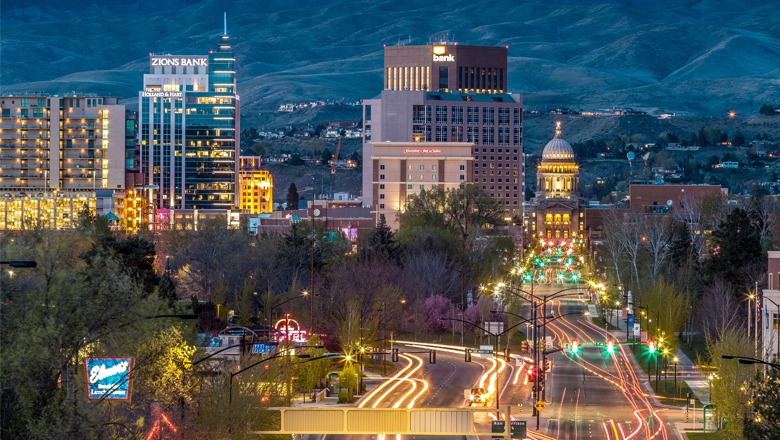
Boise did not become cheap again, and that is the first thing buyers need to hear. The housing market correction here is less like a crash and more like a hard reset after years of feverish bidding, remote-work migration, and sellers testing numbers that no longer fit the payment math. For readers tracking regional property shifts, Boise is a clear case of what happens when a loved mid-sized city gets priced like a coastal escape plan. Buyers still want the foothills, the parks, the short drives, and the calmer pace. Sellers still remember 2021. The gap between those two memories is where today’s market lives. Boise home prices have cooled from the wildest mood of the pandemic period, yet demand has not vanished. Instead, the market is asking everyone to be more honest. A buyer with a 6% to 7% mortgage rate cannot stretch the way a 2021 buyer could. A seller with a dated kitchen cannot price like every listing still gets twelve offers by Sunday night.
Why Boise’s Pandemic Boom Needed a Price Check
Boise’s rise was not random. It had the story every fast-growing American market wanted: outdoor access, lower density, a strong local identity, and enough jobs to make relocation feel safe. Then the pandemic turned that appeal into pressure. Remote workers arrived with larger budgets. Local families competed with newcomers. Investors watched the Treasure Valley like it was the next easy win. The result was not one clean price jump. It was a mood change.
Why Boise Home Prices Stopped Running Away
For a while, Boise home prices seemed to ignore local incomes. That was the warning sign. A city can attract outside money for years, but local affordability still acts like gravity. Teachers, nurses, police officers, construction workers, and first-time buyers cannot build a life on paper gains. When monthly payments rise faster than wages, demand gets thinner.
The counterintuitive part is that high prices did not kill interest in Boise. They killed urgency. Buyers still tour homes in West Boise, Southeast Boise, Meridian, and Eagle, but they no longer feel forced to waive every protection. A house that would have drawn a weekend crowd during the surge may now sit long enough for buyers to ask about roof age, HVAC life, and seller credits.
That shift matters more than a headline price drop. A market can look stable on median price while power changes hands underneath. If five clean homes sell fast and five overpriced homes linger, the median may hide the fight. You see the real change in price cuts, inspection requests, and longer talks after an offer lands.
How Remote Work Changed Local Expectations
Remote work did not invent Boise’s appeal, but it enlarged the buyer pool. A family leaving Seattle, Portland, San Jose, or Southern California could view Boise as a bargain even after locals saw prices as stretched. That mismatch pushed bids higher because one buyer’s “discount” was another buyer’s ceiling.
Then office policies became less clear. Some workers were called back part-time. Others kept remote roles but worried about job security. A Boise move that once felt easy became a bigger bet. That did not erase the migration story, yet it slowed the pace and made buyers more selective.
A concrete example shows the tension. A relocating couple may love a North End bungalow near Hyde Park, but if the payment lands hundreds of dollars above rent on a similar home, charm alone does not close the gap. They may pause, rent for a year, or look toward Kuna, Nampa, or Caldwell. That pause is the correction doing its work.
What the Housing Market Correction Means for Boise Buyers Now
The best news for buyers is not that every home is cheaper. Many are not. The better news is that the market now rewards patience, clean math, and local knowledge. The person who studies neighborhood inventory, days on market, and seller motivation has a better shot than the person waiting for a dramatic crash that may never arrive.
Why Treasure Valley Buyers Have More Room to Think
Treasure Valley buyers are no longer shopping in the same panic that shaped the pandemic rush. That changes how decisions feel. You can compare two homes without assuming both will vanish before dinner. You can ask whether a bigger yard in Meridian beats a shorter commute from Boise Bench. You can think.
This matters because Boise is not one market. Southeast Boise near the river and foothills behaves differently from West Boise subdivisions. Eagle luxury listings do not move like entry-level homes in Nampa. A single citywide number can make the market sound simpler than it is. Street-level details carry more weight now.
A non-obvious lesson: a slower market can still punish lazy buyers. Homes with smart pricing, clean repairs, and strong locations may still move fast. The extra time appears around homes with mismatched pricing, odd layouts, poor updates, or sellers anchored to the peak. That is where buyers gain ground.
Payment Shock Matters More Than Sticker Price
A $500,000 home does not mean the same thing at every mortgage rate. During the boom, low rates made large bids easier to swallow. Once rates climbed, the same price created a much heavier monthly payment. That is why Boise’s correction is partly a payment correction, not only a price correction.
Buyers should run the payment before falling for the kitchen photos. Taxes, insurance, HOA fees, repairs, and commute costs all belong in the same budget. A home that looks affordable on sale price may feel tight once the full month is counted. This is where a first-time buyer budget guide can save you from a bad stretch.
The practical move is simple. Shop by monthly comfort, not by lender maximum. If your approval says one number and your life says another, trust your life. Boise still has enough demand that sellers may not hand out deep discounts, but a buyer with firm limits can avoid becoming the person who overpays for yesterday’s market.
Where Sellers Still Have Strength in Idaho Real Estate Trends
Sellers are not powerless in Boise. That point gets lost when people hear the word correction. A correction after a price surge does not mean every owner must accept low offers. It means the old strategy of naming a wish price and waiting for fear to do the rest has weakened. Sellers now need proof.
Why Idaho Real Estate Trends Still Favor Good Listings
Idaho real estate trends still support homes that make sense on day one. Boise has lifestyle pull, limited prime locations, and steady interest from people who want the Mountain West without moving to a resort town. A clean home near good schools, parks, medical access, or downtown work hubs can still attract strong offers.
The difference is that buyers now compare harder. They notice builder incentives. They notice older roofs. They notice whether the seller painted over problems instead of fixing them. In 2021, scarcity covered many flaws. Today, flaws become negotiation points.
One example: a well-kept home near the Boise Greenbelt with updated systems may hold its price because it solves real buyer pain. A larger house farther out with worn carpet, a tired furnace, and a high asking price may need a cut. Same metro. Different outcome.
Why Peak Pricing Can Hurt More Than a Modest Cut
Some sellers fear pricing under the last high sale on the block. That fear is understandable. Nobody wants to leave money behind. Yet in a cooler market, starting too high can cost more than starting sharp. The first two weeks still shape buyer opinion.
A stale listing tells a story, even when the home is fine. Buyers wonder what they are missing. Agents start asking if the seller is stubborn. A price cut may bring attention back, but it can also signal weakness. This is why correct pricing is not a soft move. It is a strong one.
The odd truth is that a modest opening price can create better results than a proud one. It brings more qualified traffic, invites cleaner offers, and keeps the seller from chasing the market down. In Boise, where demand exists but payment pressure is real, that discipline matters.
How Investors Should Read Boise After the Surge
Investors once looked at Boise as a fast-appreciation play. Buy, hold, watch prices rise, and let the migration wave carry the numbers. That version of the deal is harder now. Rental math, insurance, taxes, repairs, and financing costs need to stand on their own. Hope is not a strategy.
Why Cash Flow Needs More Respect
During the surge, some investors accepted thin rent returns because appreciation looked almost automatic. That thinking is dangerous in a slower market. If a property does not carry itself, the owner becomes dependent on future price growth. Boise can still grow, but growth may not save a weak deal fast enough.
A small investor looking at a single-family rental in Meridian or Boise Bench should count vacancy, maintenance, property management, and capital repairs before celebrating rent. A water heater, fence repair, or tenant turnover can wipe out months of margin. That is normal real estate, but it feels harsher when financing is expensive.
This is also where local wages matter. Rent can only climb so far before tenants double up, move farther out, or stay put. Investors who ignore renter budgets may find that a house looks good on a spreadsheet and feels tight in real life.
Where Patient Investors May Still Find Value
Boise is not finished as an investment market. It is maturing. That means the easy stories fade, and the better opportunities require sharper judgment. Homes near employment centers, medical hubs, Boise State, downtown, and stable school zones can still make sense when bought at the right basis.
Patient investors may also find value in properties that owner-occupants overlook. A dated but solid home with a poor listing presentation can be better than a polished house priced to perfection. The repair risk must be priced in, though. Cosmetic upside is not free when labor and materials cost more than they did a decade ago.
For investors comparing local home affordability signals, the key is not whether Boise becomes hot again. The key is whether the purchase works in a normal market. That is the healthier test. If the deal survives slower rent growth and flat prices, any future upside becomes a bonus rather than the whole plan.
Conclusion
Boise’s reset is not a punishment for buyers, sellers, or investors. It is the market catching its breath after a period when emotion outran income. The city still has the bones that made people want it in the first place: access to open space, a strong sense of place, and neighborhoods that feel livable without losing ambition. Yet the math has changed. That is the useful lesson inside this housing market correction: Boise can remain desirable while becoming less forgiving. Buyers need payment discipline. Sellers need honest pricing. Investors need deals that work without fantasy appreciation. The next stage will not belong to the loudest bidder or the proudest asking price. It will belong to people who read the local signals early and act with care. Use official data such as the Federal Reserve Bank of St. Louis house price index for Boise, compare it with neighborhood reality, and make the move that still makes sense six months after closing.
Frequently Asked Questions
Is Boise still a good place to buy a home in 2026?
Yes, for buyers who plan to stay long enough and can afford the full monthly payment. Boise still offers strong lifestyle appeal, but it is not a bargain market. The smartest buyers focus on payment comfort, inspection results, and neighborhood fit.
Are Boise home prices likely to crash soon?
A deep crash is not the base case unless jobs weaken or forced selling rises. The more likely path is uneven pricing, with strong homes holding value and overpriced listings taking cuts. Buyers should watch inventory, mortgage rates, and seller concessions.
What caused Boise prices to rise so fast during the pandemic?
Remote work, low mortgage rates, lifestyle migration, and limited housing supply all hit at once. Buyers from higher-cost states brought larger budgets, while local inventory stayed tight. That mix pushed competition far beyond normal Boise patterns.
Where can first-time buyers find better value near Boise?
Many first-time buyers compare Boise with Meridian, Nampa, Caldwell, Kuna, and Star. Value depends on commute, school needs, home age, and loan limits. A lower price farther out may not help if transportation costs and repairs eat the savings.
Should sellers wait for Boise prices to rise again?
Waiting can work for sellers who have no pressure and own a standout home. For many owners, pricing correctly now is safer than chasing a hoped-for rebound. A stale listing can weaken negotiating power faster than a fair opening price.
How are mortgage rates affecting Boise buyers?
Higher mortgage rates reduce buying power, even when prices look stable. A buyer who could afford one price at 3% may need a lower price at 6% or 7%. That payment gap is one reason buyers are pushing back harder.
Is Boise still attracting out-of-state buyers?
Yes, but the pace and mindset have changed. Out-of-state buyers still like Boise’s lifestyle, outdoor access, and size. Many are more cautious now because remote-work rules, mortgage costs, and resale risk require deeper thought than during the boom.
What should investors watch before buying in Boise?
Cash flow, vacancy risk, repair costs, and rent limits matter more than price growth hopes. A rental that only works with fast appreciation is weak. Better deals usually have location strength, realistic rents, and enough margin for repairs.

Related Posts